
HOME
Essential Guide for First-Time Homebuyers in Austin’s 2026 Real Estate Market


Embarking on the journey of purchasing your first home in Austin is both thrilling and complex. The city’s real estate landscape is continually evolving, making it crucial for first-time buyers to stay informed and prepared. Partnering with an experienced professional can significantly ease this process. For instance, Austin TX real estate agent Soomin Kim, a top-performing eXp Realty agent and 2023-2024 Austin Board of REALTORS® Salesperson of the Year, offers invaluable insights and guidance to navigate the Austin market effectively.
Understanding Austin’s 2026 Real Estate Market
As of 2026, Austin has transitioned into a buyer’s market. This shift means that there are more homes available than there are buyers, giving purchasers increased negotiating power. According to recent reports, the median home price within city limits was $565,000 as of November 2025, reflecting a slight decline compared to previous years. This trend offers first-time buyers a more favorable environment to enter the market.
Moreover, the Austin housing market’s transformation has created a ripple effect throughout Central Texas. In surrounding areas, home values have remained steadier, with moderate appreciation observed in suburban communities. This highlights the importance of consistently monitoring market data, as conditions can vary distinctly by neighborhood and price range.
Financial Preparation Is Key
Saving for a down payment remains a significant hurdle. In Austin, it takes over eight years for a typical household to save for a median home down payment, exceeding the national average. This underscores the importance of early and disciplined financial planning.
Financial literacy plays a pivotal role in readiness to purchase. First-time buyers should focus on reviewing their credit scores, managing existing debts, and establishing a clear budget. Meeting with a mortgage lender early can help clarify how much home you can afford, what loan programs you qualify for, and identify any financial obstacles well before you begin house hunting. Many agents recommend maintaining an emergency fund equal to 3–6 months’ worth of expenses in addition to your down payment and closing costs, ensuring you won’t be left vulnerable to unexpected expenses after moving in.
Leverage Available Assistance Programs
First-time buyers should explore local assistance programs. The City of Austin offers a Down Payment Assistance program, providing up to $40,000 to eligible buyers. However, it’s crucial to note that purchase price caps may limit options within city limits, making this assistance more applicable to condos, townhomes, or homes in outlying communities.
Besides city-specific programs, Texas State Affordable Housing Corporation (TSAHC) and other regional organizations offer grants and low-interest loans, often designed specifically for first-time buyers and public service professionals such as teachers and healthcare workers. Researching these opportunities and combining programs when possible can substantially minimize your upfront costs.
Be Prepared for a Competitive Market
Despite the shift to a buyer’s market, competition remains, especially for homes priced below $300,000. These properties are scarce, and buyers should be prepared to act swiftly when such opportunities arise. Engaging with a knowledgeable real estate agent can provide a strategic advantage in identifying and securing these properties.
Low inventory in starter homes also means buyers may encounter multiple-offer situations, even when higher-priced properties linger on the market. To maximize success, ensure you’re pre-approved for financing, prepare to make strong initial offers, and remain flexible on non-essential criteria like minor repairs or cosmetic details.
Consider Expanding Your Search Area
Given the limited availability of affordable homes within Austin’s city limits, first-time buyers might benefit from considering surrounding suburbs. Areas like Round Rock, Pflugerville, and Cedar Park offer more affordable options and have seen growth in amenities and infrastructure, making them attractive alternatives.
Other up-and-coming areas, such as Leander, Hutto, and Manor, have experienced notable new construction and community development, providing more options at comparatively lower prices than Austin proper. These cities have become increasingly popular due to their access to highways, quality schools, and family-friendly neighborhoods.
Understand the Full Cost of Homeownership
Beyond the mortgage, first-time buyers should account for additional expenses such as property taxes, insurance, maintenance, and potential homeowners’ association (HOA) fees. A comprehensive budget that includes these costs will prevent financial strain post-purchase.
It is also wise to set aside funds for home improvements and unexpected repairs, such as roofs, appliances, HVAC systems, and plumbing, which inevitably require attention over time. Reviewing prior utility bills and asking about the age of key systems during the inspection process allows for realistic future planning. Many buyers also underestimate closing costs, which can include title insurance, prepaid taxes, and lender fees, typically ranging from 2% to 5% of the home’s price.
Work with Experienced Professionals
Partnering with an experienced real estate agent can make a significant difference. For instance, Austin TX real estate agent Soomin Kim, a top-performing eXp Realty agent and 2023-2024 Austin Board of REALTORS® Salesperson of the Year, has a proven track record of assisting first-time buyers navigate the complexities of the Austin market. His expertise and local knowledge can provide invaluable guidance throughout the buying process.
Experienced agents coordinate negotiations, schedule home tours, recommend reputable inspectors and contractors, and advocate for client interests from the first showing through the closing table. Their familiarity with unique local considerations, such as floodplain status, appraisal values in rapidly evolving neighborhoods, and area-specific incentives, can help buyers avoid costly mistakes.
Stay Informed and Patient
The real estate market is ever-evolving. Staying informed about market trends, interest rates, and new listings is crucial. Patience is also key; waiting for the right property that fits both your needs and budget is often more beneficial than rushing into a purchase.
Buyers are encouraged to subscribe to MLS alerts, attend open houses, and remain in close contact with their agents to keep abreast of changes in availability and pricing. In a fluctuating market, patience coupled with preparedness can lead to making an informed and confident decision when the right property appears.
By understanding the current market conditions, preparing financially, and leveraging available resources, first-time buyers can successfully navigate the Austin real estate market and find a home that meets their needs.
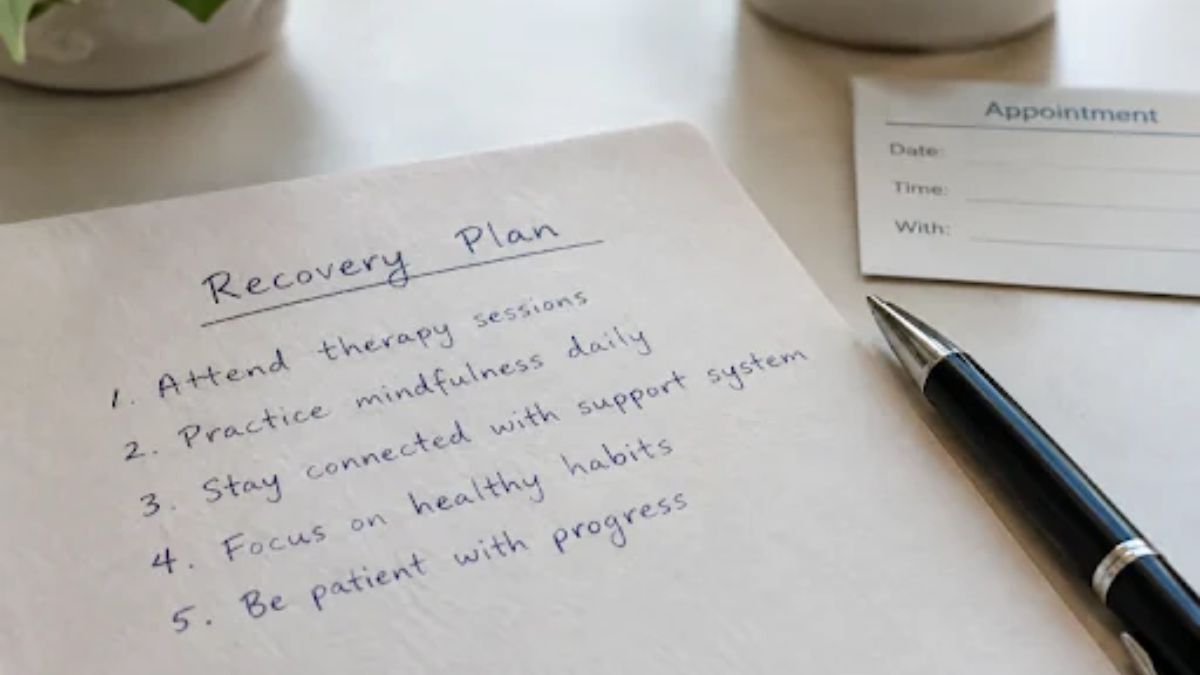
Finishing detox is an important milestone, but it is usually the beginning of the next phase of recovery rather than the end of treatment. For adults who need coordinated follow-up, alcohol addiction treatment services at Desert Mountain Healing IOP combine clinical medication support, counseling, intensive outpatient programming, case management, and recovery planning when appropriate. The Rio Rancho provider serves Albuquerque and surrounding New Mexico communities with an individualized approach that helps connect medical needs with day-to-day recovery goals.
The period after detox can feel both hopeful and uncertain. Physical withdrawal symptoms may improve, yet cravings, stress, relationship problems, mental health concerns, and practical responsibilities can still make recovery difficult. A clear plan creates structure for the days and weeks ahead.
Key Takeaways
- Detox can help a person safely manage withdrawal, but it is generally only the first stage of recovery.
- An effective plan brings together medical follow-up, counseling, routines, and personal support.
- Medication may be appropriate for some people with alcohol or opioid use disorders and should be managed by a qualified clinician.
- Transportation, housing, work schedules, and insurance can affect whether treatment is realistic and accessible.
- Recovery plans should be reviewed regularly and adjusted as circumstances change.
Table Of Contents
- Detox Is Only the First Step
- Build a Care Plan Before Leaving Detox
- Connect Medical and Behavioral Care
- Make Daily Life Work With Treatment
- Plan for Cravings and High-Risk Moments
- Consider Medication Support When Appropriate
- Use Family, Peer, and Community Support
- Review the Plan Over Time
- Common Questions After Detox
Detox Is Only the First Step
Detox focuses on the immediate effects of stopping or reducing substance use, including withdrawal symptoms that may require medical attention. Ongoing treatment addresses a different set of needs: coping with cravings, improving decision-making, treating co-occurring mental health symptoms, repairing relationships, and building a stable routine. As addiction treatment and recovery guidance explains, recovery often involves continuing care and services that support long-term health.
For example, someone may leave detox feeling physically stronger but return to the same stress at home, conflict in a relationship, or social setting connected with past substance use. Planning for those realities can make the transition less overwhelming.
Build a Care Plan Before Leaving Detox
A discharge recommendation is more useful when it becomes a specific, written next step. Before leaving detox, ask what level of care is recommended, when the first appointment will occur, who will manage medications, and what to do if symptoms worsen after regular business hours.
Questions To Answer Before Discharge
- What provider or program will handle follow-up care?
- Has the referral been received and accepted?
- How will transportation to appointments work?
- Are insurance approval, copays, or medication costs likely to create barriers?
- Which records, releases, or prescriptions need to be transferred?
When possible, schedule the first appointment before discharge. Keep the provider’s name, address, phone number, appointment time, and after-hours contact information in one place. With permission, a trusted support person can also keep a copy of the plan.
Connect Medical and Behavioral Care
Recovery can involve both physical and emotional health, so communication among providers matters. Depending on a person’s needs, care may include medical evaluations, medication management, individual counseling, group therapy, intensive outpatient services, case management, mental health screening, family education, and relapse-prevention work.
Coordinated care helps prevent a person from having to manage disconnected recommendations on their own. It also gives the treatment team a clearer view of symptoms, progress, medication concerns, and barriers to participation.
Make Daily Life Work With Treatment
A recovery plan has to fit real life. Work, school, parenting, caregiving, housing, and transportation needs do not disappear after detox. The recovery framework of health, home, purpose, and community can help people consider whether a plan supports the broader conditions needed for stability.
Daily Planning Checklist
- Set consistent times for sleep, meals, prescribed medication, and appointments.
- Arrange transportation before the first treatment session.
- Keep contact numbers and appointment reminders accessible.
- Allow time for work, family responsibilities, rest, and recovery activities.
- Limit avoidable exposure to people, places, or events strongly associated with substance use.
- Build extra time into the schedule for stressful or difficult days.
Plan for Cravings and High-Risk Moments
Cravings and stressful moments are easier to manage when a response plan is already in place. Willpower alone can be difficult to rely on when someone is tired, upset, isolated, or in an environment linked to past use.
Build a Personal Craving Plan
- List common triggers, such as conflict, loneliness, physical pain, payday, or unstructured evenings.
- Identify early warning signs, including skipped appointments, isolation, anger, or racing thoughts.
- Choose one immediate action, such as leaving the situation, contacting a support person, or calling the care team.
- Keep crisis and support numbers easy to find.
- Review the plan with a clinician or trusted person and update it when needed.
Seek urgent medical help for suspected overdose, seizures, severe withdrawal symptoms, serious breathing problems, chest pain, confusion, or immediate thoughts of self-harm.
Consider Medication Support When Appropriate
Medication-assisted treatment is not one medication or a fixed timeline. For some people, prescribed medication may reduce cravings, support stabilization, or help them participate more fully in counseling and recovery services. A qualified prescriber should consider medical history, current symptoms, other medications, treatment goals, and clinical risks.
Medication choice, dose, monitoring, and duration differ from person to person. People should not start, stop, or change prescribed medication without medical guidance. Insurance coverage and local availability may also affect the options a person can access.
Use Family, Peer, and Community Support
Support people can provide practical help without replacing professional care. They may offer transportation, help organize paperwork, provide a calm place to talk, or participate in family education when appropriate. Respect for privacy, boundaries, and treatment goals is essential.
No one person should have to carry the entire recovery plan. A broader network can include clinicians, peer support groups, trusted friends, family members, community programs, and crisis resources.
Review the Plan Over Time
Recovery plans need adjustment. A new job, move, family crisis, medication change, return to substance use, or change in mental health symptoms may call for more support or a different level of care. Missed appointments can also point to practical barriers, such as transportation problems or unstable housing, rather than a lack of commitment.
Monthly Review Questions
- Are appointments and medications accessible?
- Does the current living environment support recovery?
- Are cravings becoming easier or harder to manage?
- Which parts of the plan feel unrealistic?
- What support would make the next month safer?
Common Questions After Detox
Does Finishing Detox Mean Treatment Is Complete?
No. Detox may help stabilize the body, while continuing care can address coping skills, mental health, relationships, routines, and long-term recovery goals.
Can Someone Work While Attending Outpatient Treatment?
Outpatient care may fit around work, school, or family duties. The right schedule depends on clinical needs, stability, transportation, and available support.
What If Substance Use Happens Again?
Contact the treatment team promptly. A return to use may mean the current plan needs additional structure, a new medical assessment, different services, or stronger support.
Conclusion
Detox can open the door to recovery, but the next steps help make recovery safer and more sustainable. A practical plan connects medical care, counseling, routines, support people, and clear responses to difficult moments. The most useful plan is not necessarily the most complicated one. It is the plan a person can understand, access, and adapt as life changes.

Buying a home can feel out of reach when your financial life does not fit the standard pattern of one employer, regular pay stubs, and a long credit history. Families with contract income, multiple jobs, recent moves, or limited U.S. credit can still take meaningful steps toward becoming stronger applicants. Some borrowers may also explore ITIN mortgage loans when traditional documentation or identification requirements do not reflect their circumstances.
The goal is not to make your finances look different from what they are. It is to organize an accurate, consistent picture of how you earn, spend, save, and pay your obligations. Early preparation can help you identify gaps, answer lenders’ questions more quickly, and make a more confident decision about the price range that fits your household.
Why Financial Records Matter
Mortgage lenders generally assess an applicant’s ability to repay a loan by reviewing income, debts, available funds, credit information, and other application details. A credit score is important, but it does not always tell the full story. For example, a renter may have a reliable history of paying rent on time while having few accounts reported to the major credit bureaus.
Organized records help show the pattern behind the numbers. The Consumer Financial Protection Bureau recommends that buyers prepare by reviewing their credit, assessing their finances, setting a home-price budget, and gathering application materials before shopping for a mortgage. This can make it easier to spot issues before they become a time-sensitive problem.
What Nontraditional Financial History Means
Nontraditional financial history is a practical description of circumstances that may not appear neatly in a conventional mortgage file. It can include a thin credit profile, self-employment, contract work, income from several jobs, a short U.S. credit history, or recurring payments that are not consistently reported on a credit report.
- Self-employment, freelance work, tips, commissions, or seasonal earnings
- Income received through more than one employer or client
- Verified rent, utility, insurance, or phone payments
- Recent relocation or newly established credit accounts
- Documented savings built gradually over time
Documents to Gather Before Applying
Create one secure digital folder and keep paper copies when useful. A lender may request different items depending on the loan and borrower, but a well-organized file can reduce back-and-forth questions.
- Recent bank statements and earnings statements
- Pay stubs, tax returns, tax transcripts, 1099 forms, or business records when applicable
- Invoices, contracts, and payment records for contract or self-employed income
- Rental receipts or a landlord-provided payment history
- Utility, insurance, and other recurring payment records
- Statements for current debts and monthly obligations
- Identification documents and proof of the source of down payment funds
How Alternative Credit May Help
Some lending programs and lenders may review verified payment records beyond standard credit accounts. These records can help demonstrate a pattern of meeting recurring obligations, especially when a borrower has limited traditional credit. They are not a substitute for the full application review, and acceptance varies by lender and loan program.
Records That May Be Useful
- Rent payments made through a traceable method
- Electric, gas, water, internet, or phone bills
- Auto, renters, health, or other insurance payments
- Child care, tuition, or similar recurring obligations
Keep records that clearly identify the account holder, the payment amount, the due date, and the payment date. Cash payments can be difficult to verify without receipts, bank withdrawals, or a written payment history from the recipient.
How to Organize Different Income Sources
Families with multiple income sources should make the connection between the work performed and the money received easy to follow. A contractor, for example, can keep invoices, signed agreements, deposit records, and tax documents together to show how business income is deposited into a personal account.
- List every household income source and how often it is paid.
- Separate business and personal transactions when possible.
- Keep invoices, contracts, and deposit records in date order.
- Be ready to explain large or unusual deposits.
- Avoid moving money between accounts without retaining a clear paper trail.
How to Build a Realistic Homebuying Budget
The amount a lender may approve is not always the amount that feels comfortable for your family. Build your budget around the full monthly housing cost, including principal and interest, property taxes, homeowners’ insurance, mortgage insurance if required, homeowners’ association dues if applicable, utilities, and expected maintenance.
Also plan for upfront costs such as the down payment, closing costs, moving expenses, and immediate repairs or purchases. Review several months of actual spending before setting a target payment. The CFPB advises buyers to compare mortgage offers from multiple lenders, which can help households evaluate loan terms and costs rather than focusing on one advertised rate. This gives buyers a practical framework for that process.
Questions to Ask a Mortgage Professional
- Which documents can be used to verify my income?
- Can verified rent or utility payments be considered in this program?
- How much payment history is needed?
- How are self-employed, contract, commission, or seasonal earnings reviewed?
- Which funds may be used for the down payment and closing costs?
- What fees are due before closing, and what costs are included in the estimate?
- Would a co-borrower change the available options?
Mistakes That Can Slow Down an Application
- Applying before checking credit reports for errors or missing information
- Leaving large deposits unexplained
- Taking on new debt or opening unnecessary credit accounts before closing
- Changing jobs or income structure without discussing it with the lender
- Using cash without maintaining receipts or other documentation
- Underestimating taxes, insurance, repairs, and moving costs
A Step-by-Step Preparation Plan
- Set a price range. Base it on the full monthly cost and your household budget.
- Review credit and debts. Correct errors and understand existing monthly obligations.
- Build a document folder. Save bank, income, tax, rent, and payment records in one place.
- Track savings. Keep a clear record of where the down payment and closing funds come from.
- Speak with qualified lenders. Ask how each one reviews your specific financial records.
- Keep records current. Continue documenting income, payments, and account activity through closing.
Final Thoughts
Homeownership preparation is not limited to households with a long, conventional credit history. Clear records, steady financial habits, realistic budgeting, and early conversations with mortgage professionals can help families present a more complete application. Start by organizing the facts, protecting your savings, and choosing a home payment that supports your life after closing.
HOME
How to Plan Laser Hair Removal Around Skin Tone, Hair Growth, and Seasonal Sun Exposure in Centennial, Colorado

Planning laser hair removal in Centennial, Colorado, involves more than choosing a convenient appointment date. The timing should account for your hair growth pattern, your skin’s current condition, and how much sun exposure is likely during work, recreation, travel, and daily life along the Front Range.
For local clients comparing options, Hair To Bare South offers laser hair removal services Centennial, CO with treatment options organized by small, medium, large, and extra-large areas. Its service information helps Centennial-area clients understand the range of areas that may be treated and why a consistent, safety-focused plan matters when working toward long-term hair reduction.
Why Treatment Timing Matters
Laser hair removal is not typically a one-visit solution. The laser is designed to target pigment associated with the hair and follicle, but only some follicles are in the most responsive stage at a given time. That is why appointments are commonly spread across a series rather than scheduled back-to-back.
According to the American Academy of Dermatology’s laser hair removal guidance, many patients can be treated about every four to six weeks, although the appropriate interval depends on the person and area treated. A provider should set the schedule based on visible regrowth, skin response, and treatment goals.
How the Hair Growth Cycle Affects Results
Hair moves through several broad growth phases. Understanding them can make the treatment process feel less mysterious.
Active growth
During the active growth stage, often called anagen, the follicle has a stronger connection to the hair being treated. This is generally the stage in which laser treatment is most useful.
Transition and resting
In the transition stage, growth slows. In the resting stage, the follicle does not produce a new visible hair in the same way. Since neighboring follicles can be in different phases, one session cannot address every hair at once.
Consistency is more valuable than rushing. Scheduling too frequently does not necessarily create faster results, while long, irregular gaps can make it harder to follow a clear plan for recurring growth.
Skin Tone, Hair Color, and Hair Texture
Darker, coarser hair often provides a clearer target because it contains more pigment. Fine blonde, gray, white, and some red hair can be more difficult for laser-based treatment to detect and reduce. That does not mean a consultation is pointless, but it does mean expectations should be discussed honestly before treatment begins.
People with darker skin tones may be candidates for laser hair removal, but device selection, settings, and provider experience become especially important. Ask how the provider evaluates skin coloring and how they reduce the risk of burns, irritation, or unwanted pigment changes. A careful consultation should never treat skin tone or hair type as an afterthought.
Seasonal Planning for Centennial Sun Exposure
There is no single best season for every person, but Centennial’s bright weather and outdoor lifestyle can affect the practical side of planning. Ski days, patio time, hikes, golf, and warm-weather trips can all increase sun exposure, including when temperatures feel cool.
- Winter: Less exposed skin and fewer tanning opportunities may make aftercare easier for some people.
- Spring: Starting early can provide time for a series of sessions before summer activities become frequent.
- Summer: Treatment may still be possible, but it requires careful communication about recent sun, tanning, and travel plans.
- Fall: This can be a practical point to begin or resume a treatment series after a more sun-intensive season.
The importance of planning ahead for warmer weather is especially relevant when you expect pool days, vacations, or prolonged outdoor events. Recent tanning, including indoor tanning and self-tanning products, should be disclosed so the provider can determine whether treatment should proceed or be postponed.
Why Treatment Area Changes the Timeline
Small areas such as the upper lip, chin, or underarms can take less appointment time than the legs, back, or chest. However, a shorter appointment does not always mean a shorter overall course of treatment. Hair density, thickness, and hormonal influence can vary substantially from one body area to another.
For example, someone may notice meaningful changes in underarm hair before seeing the same degree of reduction on the legs. Facial hair can require added patience because it may be finer or influenced by hormonal changes. Maintenance visits may be useful for some people after the initial series, particularly when new growth develops over time.
Simple Steps to Prepare
- Avoid tanning and follow the provider’s instructions about sun exposure.
- Share medications, skin conditions, recent cosmetic procedures, and any history of unusual scarring.
- Ask whether shaving is recommended before your appointment.
- Avoid waxing, plucking, or epilating when the provider advises leaving the follicle intact.
- Arrive with clean skin and avoid products that may irritate the treatment area.
- Wear soft, comfortable clothing that will not rub against freshly treated skin.
Questions to Ask Before Booking
- What experience do you have with my skin tone and hair type?
- Which laser or light-based device will you use?
- How many appointments may be appropriate for this area?
- How far apart should my sessions be scheduled?
- What should I avoid before and after each appointment?
- Which side effects are expected, and which require follow-up?
- Would a consultation or test spot be appropriate?
Realistic Results and Long-Term Planning
It is more accurate to think in terms of permanent hair reduction than guaranteed removal of every hair forever. Results differ by skin tone, hair characteristics, hormonal changes, area treated, device, and appointment consistency. A trustworthy provider explains those variables clearly instead of promising identical results for everyone.
A strong consultation includes a review of recent sun exposure, a plain-language timeline, discussion of possible side effects, and a plan tailored to the individual. In Centennial, the best laser hair removal schedule is usually the one that protects your skin, fits your calendar, and gives each treatment enough time to work.
-

 HEALTH2 years ago
Integrating Semaglutide into Your Weight Loss Plan: A Practical Guide
-

 HOME IMPROVEMENT2 years ago
How to Choose the Perfect Neutral Area Rug for Every Room
-

 FASHION2 years ago
7 Celebrity-Inspired Elegant Summer Dresses For 2024
-

 HOME2 years ago
Sandra Orlow: The Teen Model Who Captivated the Internet
-

 LAW2 years ago
Teenage Drivers and Car Accidents in California: Risks and Parental Liability
-

 CONSTRUCTION2 years ago
Construction Site Safety Regulations in New York and Your Rights as a Worker
-

 LAW2 years ago
Post-Divorce Considerations in California: Modifications and Long-Term Planning
-

 FINANCE2 years ago
Digital Asset Management in Florida Estate Planning