
HOME
christiaan hetzner: A Simple Definition


Introduction
In a world inundated with information and rapid technological advancements, Christiaan Hetzner has carved out a significant niche with his insightful contributions. But who exactly is Christiaan Hetzner, and what makes his work stand out? This blog post aims to provide a simple yet comprehensive definition of his impact on journalism and the automotive industry. Whether you’re a tech enthusiast, an industry insider, or someone simply curious about influential figures in modern journalism, this piece will offer you valuable insights.
The Early Days
How It All Began
Christiaan Hetzner didn’t just stumble into prominence. His early career was marked by tenacity and an unyielding commitment to uncovering the truth. Raised in a family that valued education, Christiaan’s interest in journalism took root at a young age. He began his career covering local news before transitioning to more specialized topics.
Educational Background
Christiaan’s academic credentials are nothing short of stellar. He holds degrees from prestigious institutions that have equipped him with the analytical skills and ethical grounding essential for investigative journalism. These educational experiences not only broadened his horizons but also provided a robust foundation for his future work.
First Forays into Journalism
Starting at local newspapers, Christiaan quickly distinguished himself with his keen eye for detail and knack for storytelling. His early articles, though on smaller scales, demonstrated a clear commitment to thorough research and balanced reporting. These initial forays were instrumental in shaping his journalistic ethos.
Breaking into the Automotive Industry
Finding His Niche
While many journalists dabble in various fields, Christiaan found his calling in the automotive industry. This sector is often laden with complexities, from technological advancements to corporate strategies. Christiaan’s ability to simplify these complexities for the average reader made him a valuable asset.
Key Moments
One of Christiaan’s breakout moments was his coverage of the diesel emissions scandal. His investigative pieces not only exposed the intricacies of the controversy but also held corporations accountable. Through his work, he demonstrated the critical role of journalism in safeguarding public interest.
Building Credibility
Credibility is a coveted commodity in journalism, and Christiaan has earned it in spades. With a reputation for unbiased reporting and meticulous research, he has built a loyal readership that trusts his insights. His articles are often cited by other industry experts, further solidifying his standing in the field.
The Role of Investigative Journalism
Uncovering the Truth
Investigative journalism is not for the faint of heart, and Christiaan has shown remarkable resilience in this demanding field. His work often involves months of research, numerous interviews, and a relentless pursuit of the truth. It’s this dedication that sets him apart from many of his peers.
Impact on Public Perception
The stories Christiaan uncovers often have far-reaching implications. For instance, his exposés on corporate malpractices have led to regulatory changes and heightened consumer awareness. By bringing hidden issues to light, he empowers the public to make informed decisions.
Challenges Faced
Investigative journalism comes with its own set of challenges, from legal hurdles to personal risks. Christiaan has faced numerous obstacles but has managed to navigate them with grace and professionalism. His ability to maintain objectivity despite external pressures is commendable.
Contributions to Automotive Journalism
Pioneering Coverage
Christiaan’s contributions to automotive journalism are pioneering. He has consistently been ahead of the curve, covering emerging trends like electric vehicles and autonomous driving long before they became mainstream topics. His foresight has made him a go-to source for industry insights.
Awards and Recognitions
His work has not gone unnoticed. Christiaan has received multiple awards for his journalism, each one a testament to his skill and dedication. These accolades are not just feathers in his cap but also serve as benchmarks for excellence in the field.
Influence on the Industry
Beyond awards, Christiaan’s influence on the automotive industry is palpable. His articles often shape public discourse and influence corporate strategies. Companies pay attention to his critiques and recommendations, understanding that they reflect the sentiments of a well-informed audience.
The Power of Clear Communication
Simplifying Complex Topics
One of Christiaan’s standout qualities is his ability to make complex topics accessible. Whether it’s the technical aspects of a new vehicle or the financial intricacies of an automotive merger, he breaks down information into digestible chunks without sacrificing depth.
Engaging Writing Style
His writing style is both engaging and informative. He has a knack for weaving narratives that draw readers in while delivering valuable insights. This balance of entertainment and education makes his articles a joy to read.
Reaching a Broader Audience
By simplifying complex topics, Christiaan reaches a broader audience. His articles are not just for industry insiders but also for everyday consumers who want to stay informed. This inclusivity has broadened his reach and amplified his impact.
The Human Element
Personal Stories
Christiaan often incorporates personal stories and anecdotes into his articles. This human element adds a layer of relatability and makes his work more engaging. Readers appreciate this approach as it makes abstract concepts more tangible.
Ethical Considerations
Ethics play a crucial role in Christiaan’s work. He goes to great lengths to ensure his reporting is fair and balanced. By adhering to strict ethical standards, he maintains the trust and respect of his audience.
Building Trust
Trust is the bedrock of effective journalism, and Christiaan has built it meticulously. His commitment to accuracy and fairness has earned him a loyal readership that values his insights. This trust is a significant factor in his enduring influence.
Future Prospects
Emerging Trends
Looking ahead, Christiaan is well-positioned to continue leading the conversation in automotive journalism. He is particularly interested in emerging trends like renewable energy and sustainability in the automotive sector. His forward-thinking approach ensures he stays relevant.
Expanding Horizons
While automotive journalism remains his primary focus, Christiaan is also exploring other areas. He is interested in the broader implications of technological advancements and how they intersect with societal issues. This expansion promises to bring fresh perspectives to his work.
Continuous Learning
Christiaan is a firm believer in continuous learning. He regularly updates his skills and knowledge to keep pace with industry changes. This commitment to growth ensures that his work remains insightful and relevant.
Conclusion
In summary, Christiaan Hetzner is more than just a journalist; he is a beacon of integrity and excellence in the automotive industry. His work has not only informed but also influenced public opinion and corporate strategies. For those looking to stay ahead in the rapidly evolving world of automotive technology, following Christiaan’s insights is a must. To explore more of his work and stay updated on the latest industry trends, consider subscribing to his publications and following him on social media.


A baby pulling up on the edge of the sofa. A toddler stamping through a puddle in the park. A six-year-old sprinting across the playground at break. Three children, three completely different demands on whatever they have on their feet. Barefoot shoes for kids tend to be described as a single category, yet the shoe a child needs changes its job at least three times before primary school is well under way, and the features worth checking shift each time.
Before walking becomes walking
In the months when a baby crawls, cruises along the furniture and takes the first unsupported steps, many parents keep them barefoot indoors whenever the floor allows it. The reasoning usually given is that a young child gathers information through the soles of the feet, and anything that dulls that contact gets in the way. At this stage the shoe matters mostly outdoors and in cold rooms, where its job is protection from temperature and rough surfaces rather than support.
That is why the smallest sizes in minimalist ranges look closer to a thick sock than to a shoe. The Mini Contact 2.0, for example, pairs a soft, sock-like upper with a flexible non-slip sole, and the kids’ range starts from sizes for six to twelve months. What to look for is simple. The shoe should fold easily in your hand, stay on without squeezing, and add as little weight as possible. Grip matters on smooth floors. Structure does not.
The unsteady walker
Once walking becomes the main way of getting around, the shoe takes on more work. Toddlers fall often, kneel constantly, drag their toes and test every surface they can reach. The upper now has to survive scuffing, the sole needs enough grip for wet paths and playground matting, and the closure suddenly becomes important, because a shoe that slips at the heel is a shoe that trips.
Hook-and-loop straps are common on minimalist toddler shoes for exactly that reason. They let a parent adjust the fit around a foot that can seem chubby one month and slimmer the next, and they let a child begin putting shoes on alone, which matters more to a two-year-old than any technical feature. The toe box still has to leave room for the toes to spread. In many conventional children’s shoes the front is the narrowest part, while in a small child’s foot the toes are often the widest point.
Running, jumping and the school day
By school age the shoe is doing a third job. It has to cope with running and sudden stops, long hours on hard classroom floors, football at break and whatever the weather does on the walk home. Durability starts to count as much as flexibility, and the line between a shoe for playing and a shoe for school fades, because most children end up wearing one pair for both.
In current ranges this is where models such as the Younger Contact 4.0 and the Junior Contact 4.0 sit, both with strap closures and, on the Junior, a gum sole. Autumn and winter call for a different kind of shoe. The Winter Mini Contact adds a fleece lining, an adjustable strap and a higher collar around the ankle, while keeping a flexible minimalist sole. The higher cut keeps out cold and wet and steadies the shoe on the foot, which counts for a lot on the dark, damp school runs that start around this time of year.
What stays the same from the first pair to the last
Some things hold through all three stages. A zero-drop sole, a wide toe box and real flexibility remain the base, whatever the size. Growth is the constant problem. Children’s feet grow in irregular spurts, so checking the fit every few months, instead of waiting for a complaint, is the habit most often recommended. Children seldom say a shoe is tight; they start leaving it off, or walking a little differently, or tugging at the strap.
Measuring at home is easiest with the child standing on a sheet of paper, heel against a wall, while an adult marks the tip of the longest toe. The distance in centimetres can then be compared with the size chart, which on minimalist ranges is normally expressed in foot length rather than in a number borrowed from another system. The space left at the front should allow for movement and some growth, without turning the shoe into a slipper that flaps at every step.
Two practical details help as well. Pull out the insole, if there is one, and stand the child on it: any toe hanging over the edge is an answer in itself. And check both feet, since one is frequently a little longer than the other, and the larger foot sets the size.
Three questions, one per stage
Every new pair invites the same question: what is this shoe being asked to do now? At nine months the answer is warmth and protection on cold floors and rough ground. At eighteen months it is grip and a strap that holds the heel in place through every tumble. At six it is a sole that survives the playground, the rain and the school corridor, and still folds in half when you bend it in your hand.
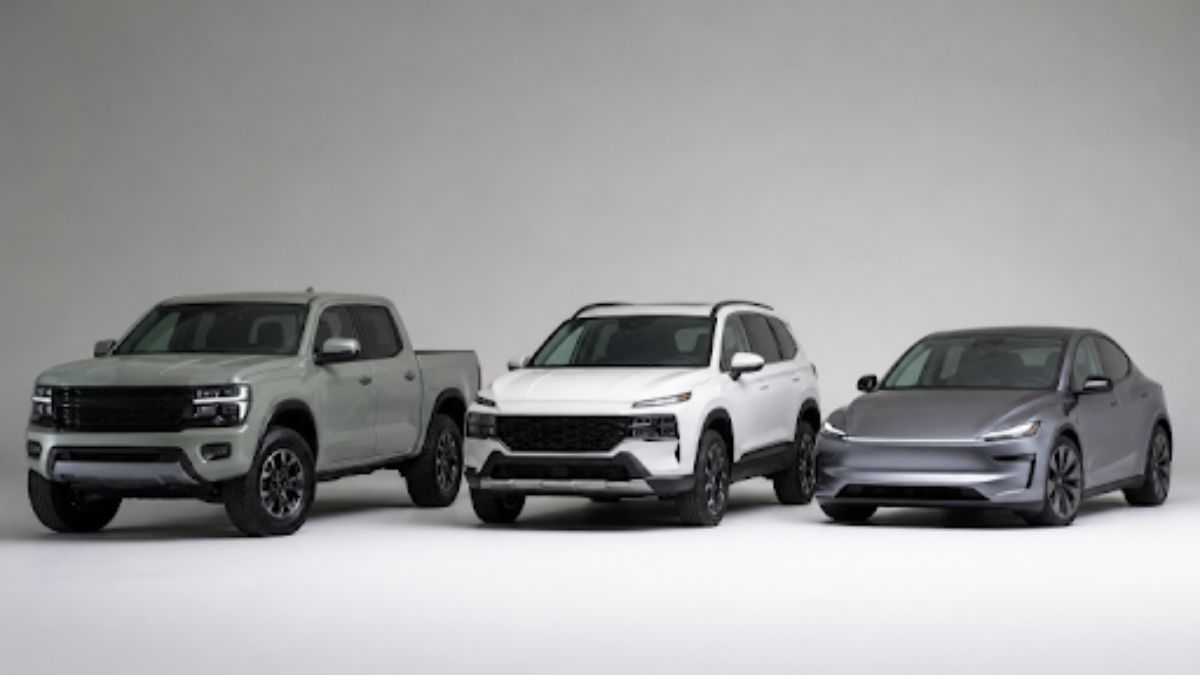
Choosing a vehicle in 2026 involves more than picking the biggest model that fits the budget. Trucks, SUVs, and electric vehicles can all offer modern safety technology, comfortable cabins, and useful capabilities, but each category solves different daily problems. Readers comparing available vehicle types can learn more before narrowing their options.
The best choice starts with an honest look at real habits: commute distance, passenger count, cargo needs, towing requirements, parking space, fuel costs, and access to charging. A vehicle that works well on an ordinary Tuesday will usually be a better long-term fit than one chosen for a single annual vacation.
Start With A Real-World Driving Profile
Before comparing trims or colors, write down what a normal week looks like. Estimate daily mileage, note how often adults, children, pets, or coworkers ride along, and list the items that need to fit inside the cabin, cargo area, or bed. Consider whether most driving happens in town, on highways, or on uneven roads.
Also, ask whether towing is a regular need, whether overnight charging is possible at home, and how many years the vehicle may stay in the household. This quick profile separates must-have capabilities from features that may be nice but are rarely used.
When A Truck Makes The Most Sense
A truck is often the strongest choice for drivers who frequently tow trailers, boats, campers, or equipment, or who carry bulky, muddy, heavy, or awkward materials. An open bed can be more practical than an enclosed cargo area for lumber, landscaping supplies, work gear, and recreational equipment.
Do not rely only on a model name or the highest advertised tow rating. Check the specific truck’s door-jamb payload label, cab configuration, bed length, drivetrain, hitch equipment, and axle setup. Payload includes people, tools, cargo, accessories, and trailer tongue weight, so it can be used up faster than many shoppers expect.
Truck Questions To Ask
- What is the heaviest load or trailer the vehicle will handle?
- Will towing happen every month or only on rare weekends?
- Is a longer bed necessary for work materials or equipment?
- Will the truck also be used for daily commuting and in tight parking areas?
Light-duty trucks suit many household towing and hauling jobs, while heavy-duty models are designed for more demanding loads. The trade-offs can include larger turning circles, higher fuel consumption, more expensive tires, and a tighter fit in garages or crowded lots.
When An SUV Is The Better Fit
An SUV is often the most balanced answer for families, commuters, road-trippers, and drivers who want passengers and cargo protected from the weather. Compact SUVs can be easier to park and less expensive to operate, midsize SUVs add room for growing families, and three-row models help when carrying more people is a regular need.
Compare usable space rather than focusing solely on maximum cargo volume figures. Check second-row legroom, third-row access, fold-flat seating, lift-over height, roof-load ratings, and whether all-wheel drive is available. A smaller SUV with a lower cargo floor may be easier to load every day than a larger model with more space on paper.
SUV Features Worth Comparing
- Second-row comfort and child-seat access
- Fold-flat seating and cargo-floor shape
- Visibility, parking cameras, and turning radius
- Ride quality and cabin noise on highway trips
- All-wheel-drive capability for local weather conditions
- Safety features such as adaptive cruise control and blind-spot alerts
When An EV Fits Daily Life
An EV can be an excellent match for predictable daily driving, especially when overnight home charging is available. Electric motors provide quiet operation, quick response, and fewer routine maintenance needs than conventional gasoline powertrains. The federal overview of all-electric vehicle operation explains how range, charging time, efficiency, and maintenance differ from gasoline vehicles.
However, EV ownership works best when charging is part of a routine rather than an inconvenience. Cold weather, fast highway speeds, steep terrain, cargo, and towing can reduce real-world range. Drivers who make frequent long-distance trips should plan routes, charging stops, and backup options before deciding that an EV is their only vehicle.
EV Readiness Checklist
- Measure usual daily mileage, including errands and school or work trips.
- Confirm whether overnight home charging is available or practical.
- Locate chargers near work, regular destinations, and common travel routes.
- Review the vehicle’s estimated range and leave a practical buffer.
- Budget for a home charging installation if needed.
Compare Fuel, Charging, And Maintenance Costs
Monthly affordability depends on more than the payment. Include fuel or electricity, insurance, registration, tires, maintenance, repairs, and possible charging equipment. Public charging availability can vary widely by route and region, so drivers should review electric vehicle charging infrastructure trends alongside their own local charging options.
Simple Annual Cost Formula
Annual energy cost = yearly miles ÷ efficiency × energy price
For a gasoline vehicle, efficiency is miles per gallon. For an EV, use miles per kilowatt-hour or kilowatt-hours per mile. Local gasoline and electricity prices make the estimate more useful, and a yearly calculation is usually more revealing than a quick guess based on a single fill-up or charging session.
Think About Towing And Payload Separately
Towing capacity is the weight a vehicle can pull, while payload is the weight it can carry. Passengers, luggage, tools, bed accessories, and hitch weight all reduce available payload. Confirm the loaded trailer weight, tongue weight, hitch rating, trailer brakes, and manufacturer guidance before choosing a vehicle. A comfortable margin is smarter than selecting a model that only barely meets the requirement.
New Or Used: Which Path Fits The Budget?
New vehicles may offer the latest technology, full warranty coverage, and more configuration options. Used vehicles can lower the purchase price and reduce early depreciation. For any used vehicle, review the history report and service records, inspect tires and brakes, look for rust or water damage, test electronics and climate controls, and arrange an independent pre-purchase inspection.
Build A Shortlist And Make The Final Choice
- Choose the vehicle category that matches the weekly driving profile.
- Set a full monthly budget that includes operating costs.
- Remove models that lack required passenger, cargo, towing, payload, or range capability.
- Compare at least three similar vehicles with comparable equipment.
- Test-drive the final choices on roads similar to your normal commute.
During the test drive, check seating comfort, visibility, parking confidence, cargo loading, control layout, and rear-seat access. A truck is usually best for regular hauling and towing. An SUV is often the strongest all-purpose choice for families. An EV can be a practical daily driver when charging and range align with real life. The right decision is the one that fits the budget, routine, and long-term needs without adding unnecessary compromises

In Bethesda, Maryland, a long power outage can affect far more than lights. It can interrupt refrigeration, heating, or air conditioning, internet access, sump pumps, garage doors, and charging for essential devices. Planning helps your household stay safer and more comfortable when severe weather, fallen trees, or utility problems disrupt service. Homeowners considering reliable backup options can start by exploring home generators Bethesda, MD, for systems designed around the circuits their homes depend on most. The goal is not necessarily to power every appliance. A practical plan identifies what your family needs during the first few hours, the first three days, and during a longer outage. Bethesda households should also account for seasonal conditions, from humid summer heat to winter cold, along with the needs of pets, children, older adults, and anyone using electrically powered medical equipment.
Why Long Outages Need a Plan
A brief blackout may only require flashlights and charged phones. A multi-day outage is different. A gas furnace still commonly needs electricity for controls and blowers, while homes with well pumps can lose water pressure when the power fails. Walk through your normal routine and consider what changes if the garage door, Wi-Fi router, refrigerator, sump pump, or powered medical equipment stops working.
Inventory Electrical Needs
Make a room-by-room list of appliances and systems, then label each as essential, useful, or optional. Essential items may include a refrigerator, selected lights, phone chargers, a sump pump, a furnace blower, or medical equipment. Record the running and startup wattages when available on equipment labels or manuals. A phone charger requires little power, whereas an air conditioner or electric space heater can quickly exceed the capacity of a small backup system.
Build an Outage Kit
Store supplies where everyone can reach them in the dark, rather than behind an electric garage door. Include flashlights, headlamps, lanterns, spare batteries, power banks, charging cables, a battery or hand-crank radio, first-aid supplies, hygiene items, prescription medicines, pet supplies, cash, and a manual can opener. Test lights and power banks regularly, rotate food, and make sure every household member knows the kit location.
Plan for Food and Water
Water and Shelf-Stable Meals
Keep drinking water in clean, food-safe containers, with additional water for cooking, sanitation, and pets. This is especially important for homes that depend on electric well pumps. Build meals around foods that need little preparation, such as canned goods, nut butter, crackers, cereal, dried fruit, shelf-stable milk, and ready-to-eat items. For more detailed guidance on extended outage preparation, review food storage, water planning, and household supply recommendations before storm season.
Refrigerator and Freezer Safety
Keep refrigerator and freezer doors closed as much as possible. A closed refrigerator generally keeps food cold for about four hours, while a full freezer can hold its temperature for about 48 hours. Use appliance thermometers instead of judging food by smell or appearance, and keep ice packs available for coolers if food must be moved.
Compare Backup Power Options
- Portable battery systems: Quiet, indoor-safe options for lights, phones, routers, and some small medical devices. Their runtime depends on battery capacity and connected loads.
- Portable generators: Useful for selected appliances and larger temporary loads, but they require fuel, outdoor operation, and safe connection methods.
- Standby generators: Permanently installed systems that can start automatically and support selected circuits or broader household loads, depending on the design.
Choose based on the loads you must support, expected outage duration, available fuel, noise concerns, and whether professional installation is needed.
Follow Generator and Carbon Monoxide Safety Rules
Carbon monoxide is colorless, odorless, and poisonous. Operate portable generators outdoors only, at least 20 feet from the home, windows, doors, and vents, with exhaust directed away from the building. The carbon monoxide safety guidance from the Consumer Product Safety Commission also advises installing battery-backed carbon monoxide alarms on every level and near sleeping areas. Never run a generator in a garage, basement, shed, porch, carport, or crawlspace. Let it cool before refueling, store fuel in approved containers, and never connect it to household wiring through a standard wall outlet. A properly installed transfer switch is the safer method for powering home circuits.
Prepare for Medical and Special Needs
List every device or medicine that needs power or temperature control. Ask healthcare providers how long medical equipment can operate on internal batteries and what backup options are appropriate. Keep medication lists, dosage information, provider contacts, and insurance details on paper. If staying home would put someone at risk, plan in advance to relocate to a relative’s home, a medical facility, a cooling center, a warming center, or a shelter.
Manage Heat and Cold
During winter outages, close unused rooms, gather in one safe living area, layer clothing, and keep blankets or sleeping bags ready. Never use a gas oven, charcoal grill, or outdoor heater indoors for warmth. During hot weather, close blinds before direct sun warms the home, drink water regularly, use battery-powered fans, and set a clear threshold for leaving if indoor conditions become unsafe for vulnerable residents or pets.
Protect the Home and Electronics
Unplug sensitive electronics during storms or unstable power conditions, while leaving one light connected to show when electricity returns. Restore appliances gradually after service resumes. Check for water intrusion, damaged wiring, tripped breakers, and unusual odors before using affected equipment. Plug-in surge protectors can help protect individual devices, while whole-home surge protection is installed at the electrical panel.
Create a Communication and Evacuation Plan
Write down emergency contacts, choose an out-of-area family contact, and sign up for utility and local emergency alerts. Identify two places you could go if the home becomes too hot, cold, dark, or medically unsafe. Keep cash available because card readers and ATMs may be unavailable, and plan exits that do not rely on an electric garage door, elevator, or traffic signal.
Test and Maintain the Plan
Run a practice outage on a calm evening. Use only the supplies and backup power included in your plan, then note what falls short. Monthly, check batteries, power banks, alarms, medication supplies, and stored water. Seasonally, rotate food, inspect cords and generator equipment, confirm fuel storage practices, and revise the plan after a move, a new appliance, a new pet, or a new medical need.
Conclusion
Preparing for a long power outage in Bethesda means planning for more than a loss of lighting. A practical plan should account for food, water, heating or cooling, communication, medical needs, electronics, and household safety. Identify essential electrical loads, keep emergency supplies accessible, and choose backup power based on your household’s actual needs. Generator safety, carbon monoxide protection, and safe food storage should also be part of the plan. Regularly testing supplies and backup systems can reveal problems before an emergency occurs. By preparing for different outage lengths and considering seasonal conditions and household needs, Bethesda families can respond more calmly and safely when power service is interrupted.
-

 HEALTH2 years ago
Integrating Semaglutide into Your Weight Loss Plan: A Practical Guide
-

 HOME IMPROVEMENT2 years ago
How to Choose the Perfect Neutral Area Rug for Every Room
-

 FASHION2 years ago
7 Celebrity-Inspired Elegant Summer Dresses For 2024
-

 HOME2 years ago
Sandra Orlow: The Teen Model Who Captivated the Internet
-

 LAW2 years ago
Teenage Drivers and Car Accidents in California: Risks and Parental Liability
-

 CONSTRUCTION2 years ago
Construction Site Safety Regulations in New York and Your Rights as a Worker
-

 LAW2 years ago
Post-Divorce Considerations in California: Modifications and Long-Term Planning
-

 FINANCE2 years ago
Digital Asset Management in Florida Estate Planning