
HOME
Diversity of Ink Used in Printing Holographic Stickers


Holographic stickers are a fascinating intersection of art and science, offering visually stunning and secure solutions for various applications. Central to their creation is the choice of ink, which not only impacts the visual appeal but also the durability and functionality of the stickers. This article delves into the different types of inks used in printing these stickers, exploring their unique properties and applications.
Intro to Holographic Stickers
Holographic stickers are characterized by their iridescent, three-dimensional appearance, which is achieved through the diffraction of light. These stickers are widely used for branding, security, and decorative purposes. The inks used in their printing play a crucial role in enhancing their visual appeal and performance.
Conventional Inks
Conventional inks are commonly used in the initial stages of holographic sticker production. These inks are typically solvent-based and provide a solid foundation for subsequent holographic layers. They are valued for their strong adhesion and vivid colors.
UV Inks
Ultraviolet (UV) inks are a popular choice for printing holographic stickers due to their fast curing times and environmental benefits. These inks are cured using UV light, resulting in a durable and resilient finish. UV inks are also known for their ability to produce vibrant and precise prints.
Water-Based Inks
Water-based inks offer an eco-friendly alternative to traditional solvent-based inks. They are composed primarily of water and contain fewer volatile organic compounds (VOCs), making them safer for both the environment and the printer. These inks are especially suitable for applications requiring high gloss and clarity.
Solvent-Based Inks
Solvent-based inks are widely used in industrial printing, including holographic stickers. These inks provide excellent adhesion to various substrates, including plastic, vinyl, and metalized films. They are known for their durability and resistance to environmental factors.
Digital Inks
Digital inks are designed for use in digital printing technologies, such as inkjet and laser printers. These inks enable high-resolution printing and are ideal for creating intricate holographic designs. Digital inks are versatile and can be used on a variety of substrates.
Specialty Inks
Specialty inks are formulated to achieve unique effects in holographic sticker printing. These inks can include metallic, fluorescent, and phosphorescent options, each adding a distinct visual element to the stickers. Specialty inks are often used to enhance the security features of holographic stickers.
Thermochromic Inks
Thermochromic inks change color in response to temperature variations. These inks are used in holographic stickers to create interactive and dynamic visual effects. Thermochromic inks can also serve as a security feature, indicating tampering through color changes.
Photochromic Inks
Photochromic inks respond to changes in light conditions, typically transitioning between transparent and colored states. These inks are used to create holographic stickers that change appearance when exposed to sunlight or UV light, adding an element of interactivity.
Electrochromic Inks
Electrochromic inks change color when an electrical current is applied. This technology is less common in holographic stickers but offers potential for innovative and interactive applications. Electrochromic inks can be used to create stickers with dynamic and customizable visual effects.
Conductive Inks
Conductive inks contain metallic particles that allow them to conduct electricity. These inks are used in holographic stickers for applications requiring electrical functionality, such as RFID tags and smart labels. Conductive inks enable the integration of electronic components into holographic stickers.
Heat-Activated Inks
Heat-activated inks respond to changes in temperature, typically becoming visible or changing color when exposed to heat. These inks are used in holographic stickers to create temperature-sensitive designs and security features. Heat-activated inks can indicate tampering or provide interactive elements.
Magnetic Inks
Magnetic inks contain magnetic particles and can be used in holographic stickers for security and authentication purposes. These inks enable the integration of magnetic strips or patterns that can be read by specialized devices, adding an additional layer of security.
Fluorescent Inks
Fluorescent inks emit light when exposed to ultraviolet light, creating bright and vibrant colors. These inks are used in holographic stickers to enhance their visual appeal and provide security features. Fluorescent inks can be used to create hidden patterns or codes visible only under UV light.

Metallic Inks
Metallic inks contain metal particles that give them a shiny, reflective appearance. These inks are commonly used in holographic stickers to enhance their iridescent effect and add a touch of luxury. Metallic inks are available in various shades, including gold, silver, and bronze.
Glow-in-the-Dark Inks
Glow-in-the-dark inks contain phosphorescent materials that absorb and store light energy, which is then emitted in the dark. These inks are used in glow in the dark stickers to create designs that glow in low-light conditions. Glow-in-the-dark inks add an element of surprise and functionality to these stickers.
Conclusion
Choosing the right ink for printing these stickers is essential for achieving the desired visual and functional effects. Each type of ink, from conventional and UV inks to specialty and conductive inks, offers unique properties that enhance the appearance and performance of the stickers. Understanding these various inks ensures the creation of stickers that are visually stunning, durable, and secure. The right ink is a key to producing high-quality holographic stickers for branding, security, and decorative purposes.
HOME
How Heaven Lights Christian Paradigm Helps Readers Explore Christian Faith, Modern Science, and Creation


Questions about creation, light, time, life, and the universe can feel difficult when readers are told they must choose between Christian faith and scientific inquiry. The heaven lights a christian paradigm ebook offers an explicitly Scripture-centered starting point for people who want to examine those questions without treating the Bible as an afterthought.
Heaven Lights is not presented as a neutral science textbook. It is a Christian theological and philosophical framework that asks readers to consider creation through biblical revelation, especially when thinking about cosmology, the origins of life, and the meaning of physical reality. Its value lies in making its starting point clear: God is the creator, and Scripture is essential to understanding creation.
Why Do Faith and Science Seem Difficult to Connect?
Science investigates the observable world through evidence, measurement, testing, and revision. Theology also considers questions that scientific methods do not settle on their own, including purpose, meaning, moral responsibility, revelation, and humanity’s relationship with God. Tension often arises when people assume that one kind of question must eliminate the other.
Many Americans do not see the relationship as purely hostile. In a recent survey, 56% of Protestants and 52% of Catholics said science and religion are mostly compatible. That does not mean Christians agree on every scientific or theological issue, but it does show why resources that address both faith and science continue to matter.
Heaven Lights enters this conversation by offering a direct Christian interpretation rather than a general overview of competing religious positions. Readers are invited to explore whether a biblical worldview changes the way they understand the universe and its origins.
What Is Heaven Lights Christian Paradigm?
Heaven Lights Christian Paradigm is a publication focused on faith, creation, science, and the operation of the universe. The Heaven Lights website describes the work as replacing Big Bang and Darwinian paradigms with an account of how God made and maintains the universe.
The site also offers a PDF book format and frames the reader’s entry into the material with Matthew 7:7-8 and Genesis 28:16-17. Those passages emphasize seeking, asking, discovering, and recognizing God’s presence. For someone making a Heaven Lights Christian Paradigm ebook request, the publication is best understood as a resource for sustained study, not a brief answer to every question about science and faith.
How Does Heaven Lights Use Scripture to Frame Creation?
Heaven Lights begins with biblical revelation. Genesis and other passages concerning light, the heavens, the earth, and God’s creative authority serve as interpretive foundations rather than supporting quotations added after scientific conclusions have already been formed.
This approach encourages readers to ask questions such as: What does the Bible say about the beginning of the universe? What does light signify in both physical and theological terms? How should Christians understand God’s relationship to space and time? And what can human observation tell us, or not tell us, about ultimate origins?
Christians interpret creation passages in different ways. Some read Genesis primarily as a historical account of material origins, while others emphasize its theological teaching about God’s sovereignty, human purpose, and the goodness of creation. Heaven Lights represents a particular biblical interpretive position, so readers should engage it thoughtfully and compare its conclusions with Scripture itself.
What Does Heaven Lights Say About Light, Space, and Time?
Light is a recurring theme in the Heaven Lights framework. The publication connects biblical language about light with questions about the visible universe, celestial bodies, the void, space-time, and the relationship between physical observation and divine action.
These are significant subjects in mainstream cosmology as well. NASA explains that the cosmic microwave background is the oldest light observable in the universe, and modern cosmology uses observations such as cosmic expansion and that background radiation when studying the universe’s early development. Heaven Lights challenges the assumptions and conclusions of that broader scientific framework through its own Christian paradigm.
That distinction matters. A faith-based interpretation may raise philosophical and theological questions about cause, design, and purpose, but it should not be described as an established scientific finding unless it has been tested and accepted through the relevant scientific processes.
How Does Heaven Lights Challenge Conventional Creation Narratives?
Heaven Lights questions the use of Big Bang and Darwinian models as complete accounts of reality. Its central concern is not merely whether natural processes can be observed, but whether naturalistic explanations can answer deeper questions about first cause, order, meaning, design, and God’s continuing relationship with creation.
Readers should distinguish carefully between challenging a paradigm and disproving it. Mainstream scientific theories are evaluated through evidence, predictive power, peer review, and continued testing. Heaven Lights instead offers an alternative Christian worldview that begins from the conviction that divine revelation provides necessary insight into origins and existence.
Questions Readers Can Explore Through Heaven Lights
- What does Scripture teach about the beginning and sustaining of creation?
- How do God, light, space, and time relate within a Christian worldview?
- Can scientific observation identify the ultimate cause of existence?
- What assumptions influence modern cosmological explanations?
- How does Heaven Lights interpret creation and biological life?
- What role should biblical revelation have when physical evidence cannot answer a question directly?
- How can a reader compare biblical and naturalistic explanations fairly?
How Should Readers Evaluate the Heaven Lights Approach?
- Identify the starting point. Heaven Lights begins with Christian belief in God as creator and Scripture as revelation.
- Separate types of reasoning. Biblical interpretation, philosophical reflection, and scientific evidence are related, but they are not identical forms of inquiry.
- Watch the language. Distinguish among a proposed model, a theological interpretation, and a scientific conclusion supported by broad evidence.
- Compare assumptions. Consider how each worldview defines origin, order, explanation, design, and purpose.
- Read the material directly. Review the full Heaven Lights publication before accepting or rejecting its claims.
What Makes Heaven Lights Useful for Faith-Based Study?
Heaven Lights brings biblical interpretation, creation, cosmology, and worldview questions into one focused resource. That can make it useful for individual reflection, conversations with a pastor, or group discussion among readers who want an openly Christian approach to scientific questions.
A productive study method is to begin with the introductory material, note the biblical passages used in the argument, record the publication’s central assumptions, and then compare those assumptions with mainstream explanations. Difficult issues can be discussed with trusted Bible teachers, science educators, and other qualified readers.
What Are the Limits of the Heaven Lights Model?
Heaven Lights should be approached as a faith-based paradigm. It does not replace astronomical observation, laboratory research, or the peer-reviewed methods used in professional science. Likewise, scientific models do not by themselves answer every theological question about God, purpose, or revelation.
The most constructive reading posture is one of intellectual honesty. Readers can take Scripture seriously, consider the publication’s claims carefully, recognize the range of Christian views on creation, and avoid overstating what either theology or science has conclusively demonstrated.
Frequently Asked Questions
Is Heaven Lights a science textbook?
No. It is better described as a Christian resource that applies biblical ideas to questions about creation, science, and the universe.
Does Heaven Lights support the Big Bang and Darwinian paradigms?
No. The Heaven Lights website presents the publication as an alternative to those paradigms.
Who may find Heaven Lights helpful?
It may interest Christians, Bible study groups, worldview students, and readers who want to investigate scientific questions from an explicitly biblical perspective.
How can someone access the Heaven Lights material?
The official Heaven Lights website provides the available publication information and describes a book in PDF format for readers who want to study the framework in greater detail.
Why Heaven Lights Matters
Heaven Lights Christian Paradigm does not remove every disagreement about faith and science. Its contribution is to give readers a clearly defined Christian framework for exploring creation, light, time, space, life, and the limits of scientific explanation. Readers who approach it with faith, careful reasoning, and a willingness to examine competing assumptions can use it as a starting point for deeper study.

Shopping for a vehicle requires more than finding a model with an affordable monthly payment. Buyers should compare the full cost of ownership, vehicle condition, financing terms, safety, fuel needs, and expected repair expenses before signing. Local shoppers who want to start comparing inventory and options can Learn More and build a realistic list of vehicles that fit their needs. A new, used, or certified pre-owned vehicle can each be a smart purchase. The best choice depends on how much you drive, how long you expect to keep the vehicle, whether you can handle surprise repairs, and how important the latest features are to your household.
Why Car Buying Requires More Planning
Vehicle pricing is only one part of the purchase. Loan interest, insurance premiums, fuel prices, maintenance, repairs, taxes, and registration can make two similarly priced vehicles cost very different amounts over time. A low payment can also hide a long loan term that increases total interest and leaves you owing more than the vehicle is worth. Buyers also have more powertrain choices than ever. Gasoline vehicles remain convenient, while hybrids, plug-in hybrids, and electric vehicles may lower fuel use for the right driver. Compare the entire purchase, including how the vehicle will work in your daily routine.
Step One: Set A Realistic Vehicle Budget
Start with a maximum purchase amount and a maximum monthly ownership amount. Include the down payment, loan payment, insurance, fuel or charging, routine service, unexpected repairs, taxes, title, registration, and fees.
For example, two vehicles may each cost $500 per month to finance. The larger SUV could require $60 more in monthly insurance, $90 more in fuel, and more expensive tires than a compact hybrid. Over several years, the same vehicle may cost thousands more to own.
Step Two: Compare New, Used, And Certified Pre-Owned Vehicles
New Vehicles
New vehicles provide the latest safety technology, a full factory warranty, and more choices in trim, color, and equipment. They also usually carry the highest purchase price and experience the fastest depreciation during the first years of ownership.
Used Vehicles
Used vehicles can offer a lower upfront price, a broader range of model years, and slower depreciation. However, buyers need to investigate the vehicle’s history, condition, service records, and likely repair needs more carefully.
Certified Pre-Owned Vehicles
Certified pre-owned vehicles are generally newer used vehicles that meet a manufacturer’s program standards for age, mileage, and inspection. They may include limited warranty coverage or roadside assistance, but usually cost more than an otherwise comparable non-certified vehicle. Read the written program terms rather than assuming all certifications provide the same level of protection.
Step Three: Match The Vehicle To Daily Driving Needs
Choose based on ordinary life, not a brief test drive or appearance. Consider your commute distance, passengers, cargo, towing requirements, parking space, road conditions, annual mileage, and highway versus city driving.
A small hybrid may suit a solo commuter with frequent stop-and-go driving. A larger SUV, truck, or minivan may make more sense for families carrying passengers, equipment, or trailers. If you are considering an EV or plug-in hybrid, home charging access deserves the same attention as cargo capacity.
Step Four: Consider Gasoline, Hybrid, Plug-In Hybrid, Or Electric
- Gasoline: Offers simple refueling and a wide selection, but fuel spending can be higher for long-distance drivers.
- Hybrid: Can improve fuel economy without requiring routine charging, particularly in city traffic.
- Plug-in hybrid: Can cover short trips on electricity when charged consistently, while retaining gasoline capability for longer drives.
- Electric: May reduce fuel and routine maintenance costs, but buyers should evaluate charging access, range, battery coverage, insurance, and repair options.
Before comparing models, use the federal tool that lets shoppers compare vehicles side by side for estimated fuel economy, energy use, and other operating details. Check current federal, state, and local incentives separately because program eligibility can change.
Step Five: Research The Exact Model
Research the precise year, trim, engine, drivetrain, and battery or hybrid system before visiting a seller. A familiar model name does not guarantee every version has the same reliability, equipment, range, or repair costs.
- Review reliability information and common repair concerns.
- Compare safety ratings, fuel economy, or estimated electric range.
- Request insurance quotes for the exact vehicle.
- Consider the cost of tires, brakes, batteries, and replacement parts.
- Check recall information and service history.
Step Six: Review Vehicle History And Condition
For used and certified pre-owned vehicles, request the vehicle identification number, review accident and title history, and examine maintenance records. Inspect tire wear, brakes, lights, fluids, body panels, electronics, and signs of water damage or uneven repairs. Use the VIN to check for open safety recalls, then arrange a pre-purchase inspection with an independent mechanic when possible. Certification does not replace your responsibility to review the warranty, inspection checklist, final price, and actual condition of the vehicle.
Step Seven: Compare Financing Offers
Check your credit before applying, then seek pre-approval from a bank or credit union. Compare the annual percentage rate, loan term, payment, and total interest. Keep the vehicle price, trade-in value, financing, and optional products separate during negotiations. For instance, a $30,000 loan may have a lower monthly payment over 84 months than over 60 months, but the longer loan can produce substantially more interest. A smaller payment is not automatically a less expensive deal.
Step Eight: Ask For The Out-The-Door Price
The out-the-door price is the complete amount required to purchase the vehicle. Ask for it in writing and make sure it includes the vehicle price, taxes, title, registration, documentation fees, dealer-installed products, and any optional protection plans. Compare written quotes using the same categories. This makes it easier to spot unwanted add-ons, inflated fees, or a lower advertised price that does not reflect the final contract amount.
Common Mistakes To Avoid
- Choosing based only on the monthly payment.
- Skipping a used-vehicle inspection.
- Assuming certified pre-owned coverage is identical across programs.
- Ignoring insurance, maintenance, and fuel costs.
- Rolling negative equity into a new loan without understanding the added debt.
- Accepting add-ons without reading the contract.
- Rushing because of a limited-time sales claim.
A Simple Decision Guide
- Choose new if you prioritize the newest features, full factory warranty coverage, and exact configuration options.
- Choose used if the lowest purchase price and broader selection matter most, and you are prepared to inspect carefully.
- Choose certified pre-owned if you want a middle ground between used-car value and added program-backed coverage.
- Choose a hybrid, plug-in hybrid, or EV if the powertrain fits your driving pattern and charging situation.
Frequently Asked Questions
Is New Always Better Than Used?
No. New vehicles offer warranty coverage and newer equipment, while used vehicles can provide a lower purchase price. The better choice depends on budget, ownership plans, and comfort with repair risk.
Is Certified Pre-Owned Worth The Extra Cost?
It can be worthwhile if the documented inspection and warranty benefits justify the price difference. Compare the specific vehicle with similar non-certified alternatives.
Should A Buyer Get Pre-Approved?
Yes. Pre-approval helps establish a budget and gives you another financing offer to compare with seller-provided financing.
Conclusion
A successful car purchase starts with understanding the total cost, realistic daily needs, and available options. Whether you choose a new, used, or certified pre-owned vehicle, compare prices, financing terms, insurance, maintenance, and expected long-term expenses before making a decision. Take time to inspect the vehicle carefully, complete a meaningful test drive, verify its history when applicable, and ask questions about warranties and service requirements. Most importantly, review every number and document before signing so you can move forward with confidence and avoid unexpected costs after the purchase.
HOME
Beyond the Printed Sleeve: The Engineering Case for Laser Marking in Electrical Wire Identification
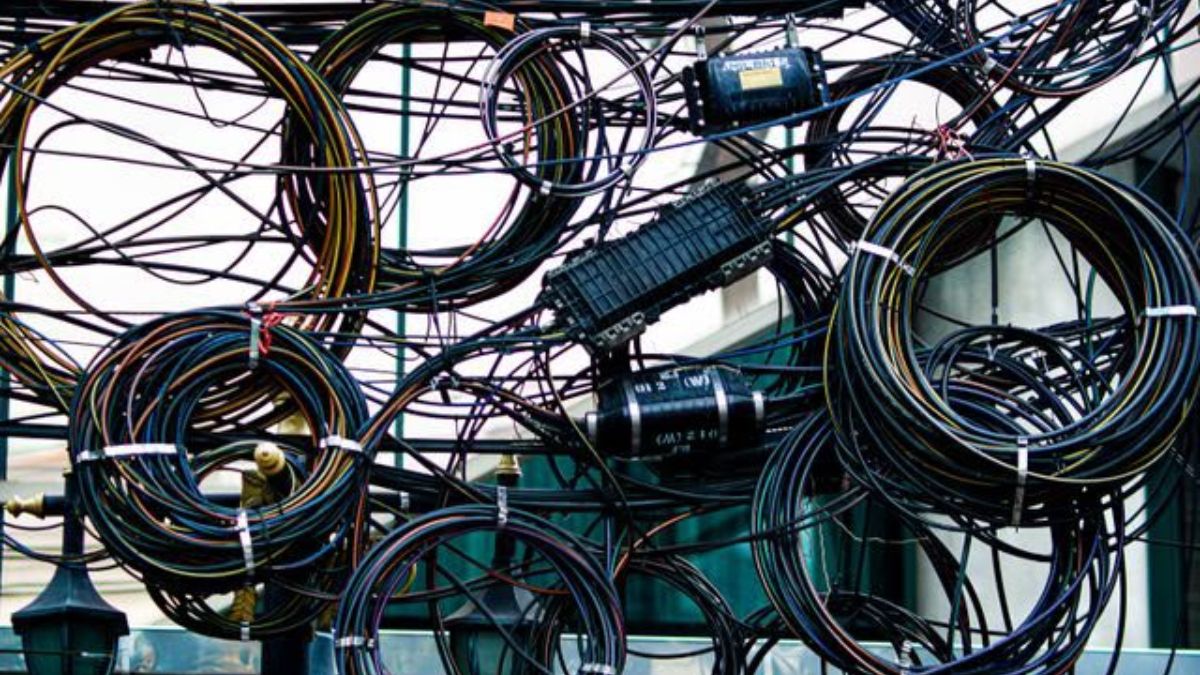
In electrical panel assembly, the wire identification step sits at a structural inflection point in the production workflow. Its output, a set of permanently and accurately labelled conductors, is the prerequisite for every downstream operation, including connection verification, functional testing, commissioning sign-off, and long-term maintenance. Yet the technologies most commonly deployed for this task remain remarkably fragile relative to the environments in which their output must perform.
The identification problem in high-density wiring environments
Modern electrical panels, whether deployed in industrial automation, railway rolling stock, marine systems, or offshore installations, present a wire identification challenge that scales in complexity with conductor density and operational longevity. A panel containing several hundred individually routed conductors, each requiring identification at both termination points with alphanumeric codes derived from the associated electrical schematic, imposes demands on marking durability, spatial compactness, and documentation accuracy that consumable-based printing technologies address only partially.
Ink-printed marker sleeves, heat-shrink labels, and ribbon-printed ferrule markers share a common vulnerability profile: the marking layer is a polymer ink or toner system deposited onto the sleeve surface. In environments where conductors are routed through cable trays subject to vibration, where maintenance technicians handle wiring looms with oil-contaminated gloves, or where operating temperatures cycle across wide ranges over the system lifetime, surface-applied ink markings degrade through a combination of mechanical abrasion, chemical attack, and thermal stress. In railway and marine applications, where maintenance intervals may be measured in years and access to the original documentation is not guaranteed, an illegible wire tag is not a minor inconvenience, it is a diagnostic failure that extends maintenance downtime and increases the risk of miswiring during corrective action.
Laser marking mechanisms applied to wire identification materials
The application of laser marking for wire tagging resolves the surface-layer vulnerability by producing markings that are integral to the sleeve or tag material rather than applied to it. The laser-material interaction varies with substrate: on polyolefin and cross-linked polyethylene sleeves, controlled carbonisation of the polymer matrix produces high-contrast dark marks on a light substrate; on certain halogen-free flame-retardant materials, foaming mechanisms generate light marks on a dark substrate. In both cases, the resulting mark has no discrete layer boundary, as the marking depth is a function of the laser parameters rather than an additive process.
The practical consequences for marking durability are significant. Laser-marked sleeves exposed to industrial lubricants, hydraulic fluids, thermal cycling, and mechanical flexion in laboratory and field testing maintain full alphanumeric and barcode readability without protective overcoating. The absence of an ink vehicle eliminates the primary chemical attack pathway through which solvent-based cleaning agents and petroleum derivatives degrade printed marks.
Spatial performance is equally relevant in dense wiring contexts. Laser systems operating with beam diameters in the range of 50 to 200 µm can produce legible alphanumeric marking on sleeves sized for conductors from 0.5 mm² cross-section upward, at character heights compatible with both unaided visual inspection and automated optical verification systems.
Schematic-to-assembly data integration
A technically underappreciated dimension of laser wire marking is its compatibility with direct data export from electrical CAD environments. Systems such as EPLAN Electric P8, Zuken E3, and AutoCAD Electrical can generate wire list exports in structured formats that laser marking controllers consume directly, producing a complete set of marked sleeves, in schematic sequence, sized and sorted by conductor, prior to the commencement of panel wiring.
This integration eliminates a class of error endemic to manual or semi-manual marking workflows, specifically transcription discrepancies between the electrical schematic and the physical marking. Where a technician manually enters identification codes into a printing system, character transposition, reference misreading, and version mismatch between the printed set and the current revision of the schematic are persistent risk factors. Direct schematic export removes the human transcription step entirely, producing a physical marking set that is, by construction, consistent with the design documentation.
Standards compliance and long-term traceability
IEC 60445 and related national equivalents governing the identification and marking of electrical equipment establish legibility and durability requirements for conductor identification that surface-printed systems meet only under ideal conditions. For installations subject to periodic third-party inspection, including those governed by machinery directive compliance requirements, railway interoperability regulations, or offshore safety cases, the long-term legibility of wire identification markings is not an operational preference, but a documented compliance requirement.
Laser-marked wire identification materials offer a technically defensible response to these requirements: permanent markings, no consumable dependencies, direct traceability to design documentation, and a durability profile consistent with the operational lifetimes of the systems in which they are installed.
-

 HEALTH2 years ago
Integrating Semaglutide into Your Weight Loss Plan: A Practical Guide
-

 HOME IMPROVEMENT2 years ago
How to Choose the Perfect Neutral Area Rug for Every Room
-

 FASHION2 years ago
7 Celebrity-Inspired Elegant Summer Dresses For 2024
-

 HOME2 years ago
Sandra Orlow: The Teen Model Who Captivated the Internet
-

 LAW2 years ago
Teenage Drivers and Car Accidents in California: Risks and Parental Liability
-

 CONSTRUCTION2 years ago
Construction Site Safety Regulations in New York and Your Rights as a Worker
-

 LAW2 years ago
Post-Divorce Considerations in California: Modifications and Long-Term Planning
-

 FINANCE2 years ago
Digital Asset Management in Florida Estate Planning